


Dates at a glance
- Ganesh Chaturthi: Monday, 14 September 2026.
- Anant Chaturdashi: Friday, 25 September 2026, the concluding immersion day.
- Hyderabad home puja: 10:59 AM–12:35 PM.
- All city times below are local times for 14 September. They are intended for worship at home.
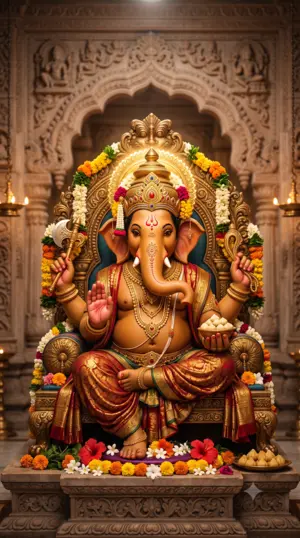
Ganesh Chaturthi, also called Vinayaka Chaviti, celebrates Lord Ganesha, worshipped as the remover of obstacles and the deity of wisdom and auspicious beginnings. Families install an idol at home, offer prayers and food, and celebrate together.
This guide explains the 2026 dates, the city timings for installing the idol, and a short home worship sequence. Sanskrit ritual terms are explained as they appear, so you can follow the steps even if this is your first Ganesh festival.
Festival dates and duration
Ganesh Chaturthi falls on Monday, 14 September 2026. The festival is observed on Bhadrapada Shukla Chaturthi, the fourth lunar day of the bright fortnight.
Anant Chaturdashi, the concluding day of the public Ganesh celebrations and immersion, falls on Friday, 25 September 2026. The interval from 14 to 25 September covers 12 calendar dates when both dates are counted. Lunar tithis do not have the same length as civil days, so the familiar description ‘ten-day festival’ is not a fixed calendar-day count for 2026.
A household may keep its idol for a shorter period according to its established custom. The final public immersion date does not mean every family must keep the idol until 25 September.
Ganesh sthapana and puja times
Ganesh sthapana means installing the idol and beginning worship. Madhyahna, the middle portion of the daylight period calculated from local sunrise and sunset, is the traditional period for this puja. It does not simply mean 12 noon on the clock.
The following windows are for household sthapana and puja on Monday, 14 September 2026. Community pandals and temples may use a different schedule. Follow the arrangements of the place where you worship.
Times use the 24-hour clock and each city’s local time, including daylight saving where applicable. For example, 13:21 means 1:21 PM. Do not convert the overseas rows from Indian time.
Puja times in India
| City | Puja time |
|---|---|
| Hyderabad | 10:59–12:35 |
| Dharmapuri, Karimnagar, Jagtial | 10:57–12:33 |
| Adilabad | 10:59–12:35 |
| Warangal | 10:55–12:31 |
| Vijayawada | 10:51–12:27 |
| Visakhapatnam, Vizianagaram | 10:40–12:16 |
| Tirupati | 10:56–12:32 |
| Bengaluru | 11:03–12:39 |
| Chennai | 10:52–12:28 |
| Mumbai | 11:22–12:58 |
| New Delhi | 11:04–12:41 |
| Kolkata | 10:19–11:56 |
Puja times outside India
| City | Puja time |
|---|---|
| New York, USAEDT · UTC−04:00 | 12:04–13:21 |
| Los Angeles, USAPDT · UTC−07:00 | 11:35–13:12 |
| Dublin, California, USAPDT · UTC−07:00 | 11:49–13:27 |
| Dallas, USACDT · UTC−05:00 | 12:09–13:46 |
| London, UKBST · UTC+01:00 | 11:41–13:20 |
| Toronto, CanadaEDT · UTC−04:00 | 12:04–13:38 |
| Sydney, AustraliaAEST · UTC+10:00 | 11:38–12:14 |
| Melbourne, AustraliaAEST · UTC+10:00 | 11:38–12:39 |
All timings in this table were taken from the OnlineJyotish Hindu festival calendar. For another location, select your city in our Hindu festival calendar and check September 2026. Check your city’s festival calendar
Moon sighting and the Syamantaka story
A traditional belief associated with Ganesh Chaturthi asks devotees to avoid seeing the Moon during the relevant Chaturthi observance, because it is linked with mithya-apavada—being falsely accused. This is a religious observance, and its timing should not be understood as ‘the whole night’ everywhere; the local tithi and Moon visibility matter.
The Syamantaka story tells how Shri Krishna faced an accusation of stealing the Syamantaka jewel after seeing the Moon on this occasion. Reading or listening to the story is the traditional response if the Moon is seen accidentally.
The Syamantaka verse
When listening to the full story is not possible, the practice described here is to recite the following verse 11 times and bow to Ganesha with devotion.
Siṃhaḥ Prasenam avadhīt, siṃho Jāmbavatā hataḥ;
Sukumāraka mā rodīs, tava hyeṣaḥ Syamantakaḥ.Meaning: A lion killed Prasena, and Jambavan killed that lion. Do not cry, little child; this Syamantaka jewel is yours.
The recitation is offered as a traditional act of prayer for relief from the associated dosha; it expresses faith and devotion.
A simple home puja
Prepare a clean worship space and keep the offerings within reach. This is a short guide; use your family’s puja text or priest’s instructions for the complete mantras.
Prepare the idol and materials
Choose an unpainted clay idol where possible. Arrange flowers, fruit, wood apple if available, durva grass and the food offerings. Some Telugu festival customs allow tulsi on this day, while other traditions avoid it in Ganesh worship; follow your own family’s practice.
Invite Ganesha
Place the idol respectfully and perform avahana, the invitation to the deity. Prana pratishtha is the ritual invocation of divine presence in the idol; follow the method used in your household.
Prepare the naivedya
Offer 21 undrallu or kudumulu, or modaks according to your regional tradition. These are different regional preparations, offered as naivedya—food presented to the deity before it is shared as prasada.
Offer the worship
Perform shodashopachara puja, worship through sixteen services or offerings, according to your puja text. Offer flowers and food with devotion.
Offer durva grass
Recite the ten names below, offering two blades of durva with each name. Offer the remaining twenty-first blade while repeating all ten names, then complete the prayers according to your custom.
Ten names of Ganesha
In this durva offering, each ‘Om … Namah’ means ‘salutations to …’. Offer two blades with each name and one final blade after all ten.
- Om Ganadhipaya NamahSalutations to the lord of the ganas.
- Om Umaputraya NamahSalutations to the son of Uma.
- Om Aghanashakaya NamahSalutations to the remover of sins.
- Om Vinayakaya NamahSalutations to Vinayaka.
- Om Ishaputraya NamahSalutations to the son of Ishvara.
- Om Sarvasiddhipradayakaya NamahSalutations to the giver of all attainments.
- Om Ekadantaya NamahSalutations to the one-tusked Lord.
- Om Ibhavaktraya NamahSalutations to the elephant-faced Lord.
- Om Mushika Vahanaya NamahSalutations to the Lord whose vehicle is the mouse.
- Om Kumaragurave NamahSalutations to the guru of Kumara.
Immersion and its meaning
Ganesh visarjan is the respectful farewell and immersion of the idol after worship. In the devotional understanding of the festival, Ganesha returns to his divine abode, taking away the devotees’ obstacles. The final public immersion associated with Anant Chaturdashi is on 25 September 2026; household observances may end earlier.
For an unpainted natural-clay idol, a container of water at home offers a simple way to perform immersion. Remove flowers and decorations first; once the clay dissolves, return the clean clay to the soil. For a community immersion, follow the local arrangements.
About the information in this guide
The original Telugu article was researched and written by Sri Gollapelli Santhosh Kumar Sharma using traditional references such as Dharmasindhu and Drik Siddhanta Panchanga calculations. The city timetable is his published guidance for home puja. Regional customs and community arrangements may differ.

Browse all astrology and Hindu culture articles
Vedic Astrology/ Vastu/ Hindu Culture Articles: A Comprehensive Library
Featured Articles
Marriage Matching Complete Details
Lunar Eclipse Article for people living in US & Canada
Lunar Eclipse Article for people living in India
Past event timings, year-specific festival guides and historical one-time articles are kept here for reference.