


Narayan Bali, Nagbali, Tripindi & Kalasarpa Puja Guidelines
Executive Summary
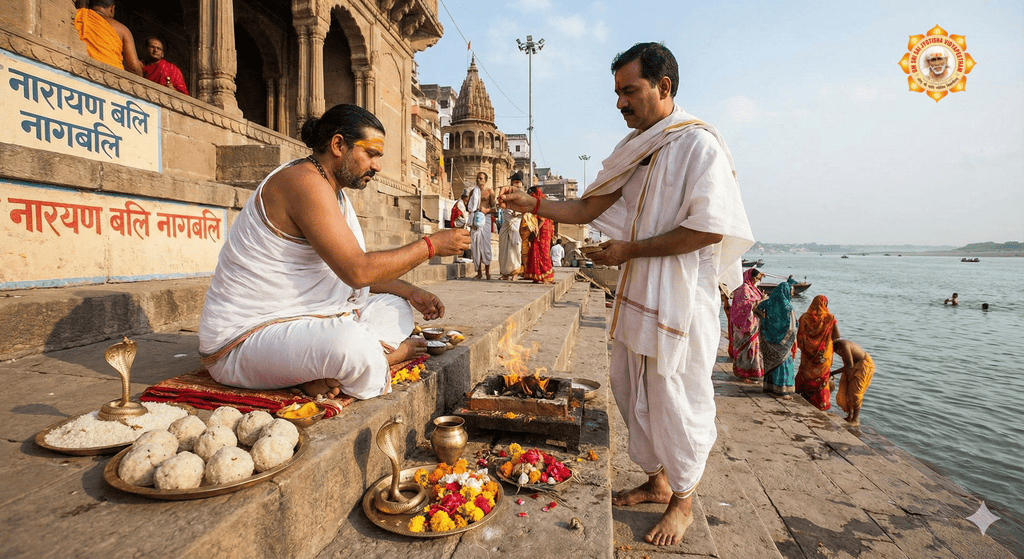
Narayan Bali, Nagbali, Tripindi, and Kalasarpa Shanti are remedial rituals in Sanatana Dharma for resolving Pitru Dosha (ancestral afflictions) and Sarpa Dosha (serpent afflictions). Narayan Bali is for ancestors who met untimely death, Nagbali addresses the sin of snake killing, Tripindi supports liberation of three generations of ancestors, and Kalasarpa Shanti reduces severe Rahu–Ketu afflictions. Kshetras like Trimbakeshwar, Gokarna, Srikalahasti, and Rameswaram are preferred, and strict rules for the Karta, diet, and attire must be followed.
On this page
Ritual Procedures and Strict Guidelines
In Hindu Vedic tradition, certain Doshas cannot be resolved by simple prayers alone. Rituals related to Ancestors (Pitaras) and Serpent Deities require purity of Desha (Place), Kala (Time), and Patra (The Person). Follow the traditional guidelines below for best results.
1) Narayan Bali & Nagbali
Though distinct, many kshetras (especially Trimbakeshwar) perform them together over 3 days.
- Purpose:
- Narayan Bali: Peace for souls who died unnatural/untimely death (Durmarana) and relief from Pitru-related distress.
- Nagbali: Reduces Sarpa Hatya Dosha from harming serpent species (knowingly/unknowingly) in this or prior lives.
- When Narayan Bali is necessary:
- Accidental deaths, suicide, homicide, drowning, fire/electrocution.
- Death due to snake bite/poisoning or sudden unnatural causes.
- Improper funeral rites or signs of ancestral unrest (as per family tradition/learned guidance).
- Eligibility (who can perform):
- Eldest son or male heir (Karta) typically performs it.
- Best results when performed by a married couple; pregnant women must not participate.
- Unmarried individuals may be permitted in some traditions—follow kshetra rules.
- Rules & austerities:
- Observe ritual discipline (Sutak/Ashaucha protocol as guided locally).
- Diet: Start sattvic diet at least 7 days before; avoid onion/garlic/meat/alcohol.
- Attire: Men: Dhoti + Angavastram only. Women: traditional saree (avoid black/dark green as per many traditions).
Who should NOT perform these rituals?
- Pregnant women: must not participate as karta/co-karta.
- During Ashaucha: postpone if there is a recent birth/death impurity period.
- Those recovering from severe illness/surgery should follow medical + priest guidance.
2) Tripindi Shradh
Tripindi is a powerful Kamya Shradh to clear ancestral debt and bring lineage peace.
- Why it is done: To satisfy the last three generations (Father, Grandfather, Great-grandfather) when regular Shradh/Tarpana is discontinued or ancestors remain unsatisfied.
- Typical procedure:
- Usually a one-day ritual (approx. 3–4 hours).
- Three pindas are offered as per local tradition.
- Can be performed outside Pitru Paksha as per temple calendar (many allow in Karthika/Shravana or suitable tithis).
3) Kalasarpa Shanti Puja
When all planets fall between Rahu and Ketu, Kalasarpa Yoga is said to create strong blocks to progress. Shanti aims to reduce these pressures.
- Guidelines:
- The affected person should perform it. For children, parents can perform on their behalf.
- Attire: New clean traditional clothes recommended; black forbidden in many traditions.
- Timing: Nag Panchami / Amavasya / Rahu Kalam—follow kshetra calendar.
- Many traditions recommend a Shiva worship follow-up (e.g., Rudrabhishekam).
Note: After Shanti, return home directly and maintain sattvic discipline.
4) Shani Shanti (Sade Sati Remedies)
When Saturn influence is intense (Sade Sati, Ashtama Shani, adverse Saturn periods), delays and heavy responsibilities may increase. Shani Shanti at a designated kshetra helps one endure karma with stability.
- When to do: Beginning/peak of Sade Sati, Ashtama Shani, or difficult Saturn Mahadasha/Antardasha.
- Common remedies: Sesame oil lamp, charity of black sesame/black gram/clothes, Hanuman worship.
- Repetition: Unlike Narayan Bali, Shani Shanti can be repeated based on severity.
Forbidden / Caution Times (Nishedha Kaala)
- Eclipse period: Avoid unless the ritual specifically calls for eclipse timing as per kshetra tradition.
- Inauspicious tithis/yogas (Bhadra, etc.) as per local panchang.
- Days with adverse Tarabala/Chandrabala (as guided locally).
Post-Puja Rules (Important)
- Return home same day and take head bath immediately.
- Consume only sattvic food for the next 2–3 days.
- Avoid meat/alcohol/smoking and unnecessary conflicts.
- Complete the remedy with Annadaanam and dakshina as per tradition.
Importance of Daan (Donation)
Daan completes the ritual fruit. Depending on the kshetra, devotees donate a golden cobra, clothes, food grains, sesame, etc. This represents clearing karmic debts.
5) Best Pilgrimage Sites (Kshetras)
These rituals are traditionally performed at powerful kshetras, especially on holy river banks and Jyotirlinga regions:
- Trimbakeshwar (Maharashtra): Jyotirlinga & origin of Godavari. Major center for Narayan Bali, Nagbali, and Tripindi.
- Gokarna (Karnataka): Famous for Tripindi and related rites.
- Srikalahasti (Andhra Pradesh): Rahu-Ketu kshetra; popular for Kalasarpa remedies.
- Rameswaram (Tamil Nadu): Auspicious for Tila Tarpana and Tripindi Shradh.
- Shani Kshetras: Shani Shingnapur, Thirunallar for Shani Shanti.
Why Trust This Information? (E-E-A-T)
This guide is curated from classical dharma texts and kshetra traditions and is presented under the editorial guidance of OnlineJyotish.com. Procedures may vary slightly by temple tradition; always follow the local pundits and kshetra protocol.
Related Astrology Tools (OnlineJyotish.com)
Glossary of Terms
- Narayan Bali
- A ritual performed to grant peace to ancestors who died prematurely/unnaturally.
- Nagbali
- A remedial ritual addressing Sarpa Hatya Dosha (harm to serpent species).
- Tripindi Shradh
- A Kamya Shradh for satisfying the last three generations of ancestors.
- Kalasarpa Dosha
- An astrological condition where planets are hemmed between Rahu and Ketu.
- Shani Shanti
- Remedies for difficulties associated with Saturn phases (like Sade Sati).
- Kshetra
- A sacred pilgrimage site with strong spiritual energy fields.
FAQs
Who should perform Narayan Bali?
Typically, the eldest son or male successor (Karta) should perform it. It is highly beneficial if performed by a married couple together. However, a pregnant woman must strictly not participate in this ritual.
When is Narayan Bali mandatory?
It is required in cases of unnatural or untimely death (accidents, suicide, drowning, snake bites, etc.) or if funeral rites (Antyesti/Shradh) were not performed correctly, causing unrest to the soul.
Why is Nagbali performed?
Nagbali is performed to reduce Sarpa Hatya Dosha (sin of killing a snake), incurred by knowingly or unknowingly killing a snake or destroying an anthill/snake pit in this life or past lives.
What is the purpose of Tripindi Shradh?
Tripindi Shradh is performed to satisfy the souls of the last three generations of ancestors (Father, Grandfather, Great-grandfather) and to resolve Pitru Dosha caused by discontinuation of Shradh and Tarpana.
When should Kalasarpa Dosh Puja be done?
If all planets are hemmed between Rahu and Ketu (Kalasarpa Yoga), this Shanti is performed. Many kshetras recommend Nag Panchami, Amavasya, or as per temple tradition.
Can these rituals be done without astrological consultation?
Not recommended. These are not generic remedies. Perform them only when Pitru Dosha/Sarpa Dosha/Kalasarpa Yoga is indicated and the kshetra priests approve eligibility.
Can these Pujas be repeated?
Narayan Bali and Nagbali are generally once-in-a-lifetime. Tripindi Shradh may be repeated after 12 years if necessary. Kalasarpa/Shani Shanti can be repeated based on severity and priestly guidance.


 Are you interested in knowing your future and improving it with the help of Vedic Astrology? Here is a free service for you. Get your Vedic birth chart with the information like likes and dislikes, good and bad, along with 100-year future predictions, Yogas, doshas, remedies and many more. Click below to get your free horoscope.
 Are you searching for a detailed Panchang or a daily guide with good and bad timings, do's, and don'ts? Our daily Panchang service is just what you need! Get extensive details such as Rahu Kaal, Gulika Kaal, Yamaganda Kaal, Choghadiya times, day divisions, Hora times, Lagna times, and Shubha, Ashubha, and Pushkaramsha times. You will also find information on Tarabalam, Chandrabalam, Ghata day, daily Puja/Havan details, journey guides, and much more.