

Durga Ashtami 2025: Significance, Puja Vidhi, Kanya Pujan & Fasting
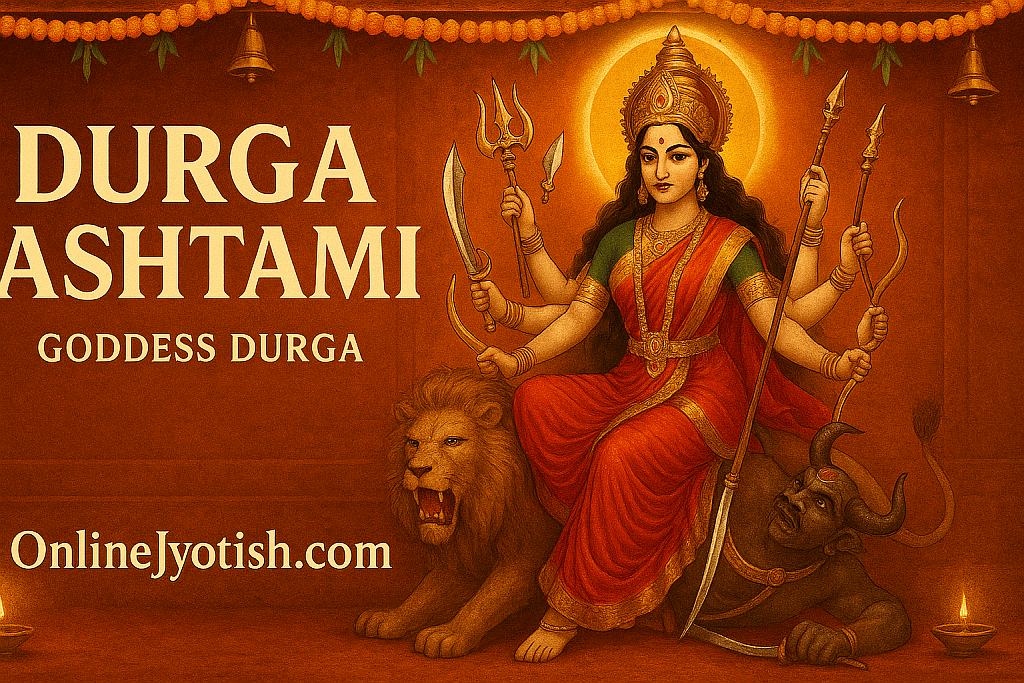
Durga Ashtami, also known as Maha Ashtami, is one of the most auspicious and significant days of Navarātri. Falling on the eighth day of the nine-day festival, it commemorates Goddess Durga's victory over the buffalo demon Mahishasura. On this day, devotees worship Maa Mahagauri, the eighth form of Navadurga, who symbolizes purity, serenity, and compassion. The day is marked by elaborate rituals, fasting, and the sacred Kanya Pujan (worship of young girls), culminating in the powerful Sandhi Puja at the juncture of Ashtami and Navami.
Significance of Durga Ashtami
- Mahagauri Worship: Devotees specifically venerate Maa Mahagauri. Her iconography features a white complexion, riding a bull, and holding a trident and a damaru. She blesses devotees with purity, spiritual growth, and relief from suffering.
- Victory of Good Over Evil: Ashtami emphasizes Goddess Durga's fierce power to annihilate negative forces, making it a day for seeking protection and strength to overcome life's challenges.
- Kanya Pujan: A pivotal ritual where nine young, unmarried girls (symbolizing the nine forms of Durga) are worshipped, their feet washed, and offered food and gifts. This honors the divine feminine energy inherent in them.
- Sandhi Puja: The most critical ritual of Durga Puja, performed at the precise juncture when Ashtami tithi ends and Navami tithi begins. This period is considered extremely powerful, as it was when Goddess Durga began her final assault on Mahishasura. It involves elaborate offerings and chanting.
Durga Ashtami Puja Vidhi (Rituals & Practices)
- Morning Puja: Begin with a purifying bath ( snāna) and resolve ( saṅkalpa) for the day's worship. Worship Maa Mahagauri with flowers (especially white or jasmine), incense ( dhūpa), lamps ( dīpa), and offerings.
- Offerings: Coconut, sweets (especially white sweets or Kheer), fruits, and milk are common offerings.
- Mantra Chanting: Recite Maa Mahagauri's mantra: ॐ देवी महागौर्यै नमः — Oṃ Devī Mahāgauryai Namaḥ, along with other Durga mantras and stotras.
- Kanya Pujan (Kumari Puja): Typically performed after the morning puja. Nine young girls (aged 2-10, who have not attained puberty) are invited, seated, revered as manifestations of the Goddess, their feet washed, and then offered a meal (often halwa, puri, and chana) and gifts.
-
Sandhi Puja:
- Timing: It spans the last 24 minutes of Ashtami tithi and the first 24 minutes of Navami tithi (a total of 48 minutes).
- Rituals: A highly intense ritual involving 108 lotus flowers, specific mantras, bali (symbolic sacrifice, often of a pumpkin or coconut), and a grand ārati. It is a time for deep meditation and seeking the ultimate blessings of the Goddess.
Fasting on Durga Ashtami
Many devotees observe a fast on Durga Ashtami, often as part of the larger Navarātri fast. This can be a full fast (without food or water), a water-only fast, or a phalahari fast (consuming only fruits, milk, and specific non-grain foods like Kuttu atta or Singhara atta). The fast is broken after the Sandhi Puja or after the completion of the day's rituals.
Key Durga Temples for Pilgrimage/Celebration
Durga Ashtami is celebrated with immense fervor across India. Some prominent temples and regions known for their grand celebrations include:
- Vaishno Devi Temple, Katra (Jammu & Kashmir) — Draws millions of pilgrims during Navaratri.
- Kalighat Temple, Kolkata (West Bengal) — One of the 51 Shakti Peeths, witnessing grand Durga Puja celebrations.
- Kamakhya Temple, Guwahati (Assam) — Another powerful Shakti Peeth, known for its unique Tantric traditions.
- Chamundeshwari Temple, Mysuru (Karnataka) — Central to the famous Mysuru Dasara celebrations.
- Ambaji Temple, Ambaji (Gujarat) — A major Shakti Peeth, with vibrant Garba dances.
- Karni Mata Temple, Deshnok (Rajasthan) — Famous for its rat population, dedicated to a Durga incarnation.
- Jhandewalan Mata Temple, Delhi — A very popular urban Durga temple with grand Navaratri festivities.
Spiritual Significance & Takeaways
- Inner Purity & Light: Worshipping Mahagauri encourages inner purification and the shedding of negativity, illuminating one's consciousness.
- Empowerment of the Feminine: Kanya Pujan reinforces the Vedic reverence for women and girls as living embodiments of divine energy.
- Overcoming Challenges: The fierce aspect of Durga on Ashtami inspires courage and resolve to face and conquer obstacles in life.
- Timeless Victory: Sandhi Puja reminds us that at the darkest juncture, divine power can manifest to bring about ultimate victory and transformation.
References & Further Reading
- Devi Mahatmyam (Markandeya Purana) for the narratives of Durga's battles and forms.
- Navadurga Stuti and Dhyana mantras (classical texts).
- Hindu Dharma Sindhu by Kāśīnātha Upādhyāya for detailed ritual prescriptions.
- Regional temple boards and tourism departments for specific Ashtami and Navaratri schedules.
About the Author

Santhosh Kumar Sharma Gollapelli is a Vedic Astrologer and the founder of OnlineJyotish.com (est. 2004). He builds multilingual Panchangam & festival calculators with Swiss-Ephemeris and classical Dharmashāstra rules, and writes practical guides connecting śāstra with daily life.
Reviewed for alignment with common temple practice and cited sources.


 Want to find a good partner? Not sure who is the right match? Try Vedic Astrology! Our Star Matching service helps you find the perfect partner. You don't need your birth details, just your Rashi and Nakshatra. Try our free Star Match service before you make this big decision!
We have this service in many languages:
Want to find a good partner? Not sure who is the right match? Try Vedic Astrology! Our Star Matching service helps you find the perfect partner. You don't need your birth details, just your Rashi and Nakshatra. Try our free Star Match service before you make this big decision!
We have this service in many languages:
 The Hindu Jyotish app helps you understand your life using Vedic astrology. It's like having a personal astrologer on your phone!