

Navaratri Day 5 — Skandamata Devi: Alankara, Significance & Puja Vidhi
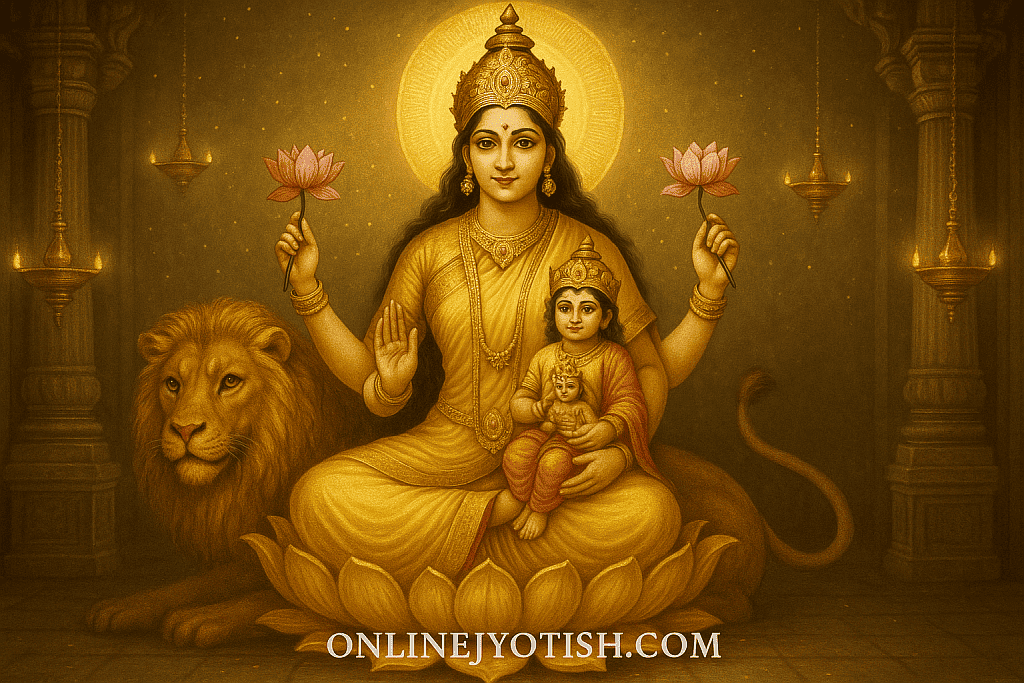
On Day 5 of Navarātri, devotees worship Maa Skandamata—the mother of Skanda (Kartikeya), the commander of the gods against the demons. She embodies pure maternal affection, wisdom, and the power to grant salvation ( mokṣa). Her iconography typically shows Her four-armed, holding lotuses, with one hand in abhaya mudrā (granting fearlessness), and carrying baby Skanda on her lap. She is often depicted riding a lion, symbolizing both fierce protective love and the ability to overcome obstacles. Meditating on Skandamata cultivates purity, inner peace, and the blessings of progeny.
Who is Skandamata?
- Iconography: Four-armed Goddess, holding two lotuses, one hand in abhaya mudrā, and carrying Lord Skanda (Kartikeya) in her lap. Often seated on a lotus (Padmasana) or riding a lion.
- Essence: The epitome of motherhood, wisdom, and compassion. She represents the pure, nurturing aspect of the Divine Mother, guiding her children towards spiritual growth and protection from worldly afflictions.
- Mantra: ॐ देवी स्कन्दमातायै नमः — Oṃ Devī Skandamātāyai Namaḥ.
Skandamata Devi Alankāra (Temple & Home)
- Form & motifs: Focus on Her maternal aspect; baby Skanda in her lap is central. Lotuses are key decorative elements. Her lion mount should be depicted near or beneath her.
- Attire & tone: Traditionally, a tranquil and pure yellow or white is associated with Skandamata, symbolizing purity and warmth. Dress the idol/image in light, serene colors, adorned with fresh yellow or white flowers (like jasmine or yellow marigolds).
- Offerings: Bananas are a very common offering for Skandamata, symbolizing progeny and well-being. Other sāttvika offerings include milk, kheer (rice pudding), or other white sweets. Keep the offerings pure and simple, reflecting her gentle yet powerful nature.
Significance (Inner Sādhanā)
- Maternal Protection: Meditating on Skandamata invokes her protective love, guarding devotees from negativity and guiding them through life's challenges.
- Wisdom and Purity: She helps purify the mind, granting wisdom and discernment. Her presence fosters inner peace and spiritual clarity.
- Blessings for Progeny: Devotees seeking blessings for children, or for the well-being and success of their existing children, especially pray to Skandamata.
- Mastery over senses: Her association with Skanda, the god of war and valor, also signifies the mother's role in guiding her child to master their inner battles and senses.
Puja Vidhi (Simple, Authentic & Doable)
Mantra-japa: A fixed count of “ॐ देवी स्कन्दमातायै नमः — Oṃ Devī Skandamātāyai Namaḥ.” You may also recite the standard Navadurga stotras of your tradition, or the Devi Suktam.
Vidhi snapshot: Morning snāna & saṅkalpa → (Day 1 ghaṭastāpana already done) → invoke Skandamata with āvāhana → offer gandha, akṣata, yellow/white flowers, dhūpa, dīpa → mantra/stotra → naivedya (bananas, kheer, milk, or other simple sweets) → ārati → kṣamāprārthanā. Emphasize purity of intention and devotion over elaborate rituals.
From Day 4 to Day 5 — The Inner Bridge
Day 4's Kuṣmāṇḍā stimulates cosmic creation and radiant vitality. Day 5's Skandamata channels this creative energy into pure, protective, and nurturing maternal love, fostering growth and wisdom—moving from the expansive creation to focused, compassionate development.
Where Navarātri is Celebrated on a Grand Scale
Navarātri is pan-Indian, but a few places are renowned for scale, heritage, or Śakti– pīṭha sanctity:
- Mysuru (Sri Chamundeshwari, Karnataka) — The state festival “Mysuru Dasara” features palace programs, Chamundi Hill rituals, exhibitions and the famed Vijayadashami Jamboo Savari.
- Shri Mata Vaishno Devi, Katra (J&K) — Sharad Navarātri draws large pilgrim footfalls with Shrine Board arrangements and daily ārati.
- Kamakhya Temple, Guwahati (Assam) — Śāradīya Durga Puja/Navarātri observed in a distinctive fortnight rhythm with Chandi recitation and Kumāri-pūjā.
- Ambaji & Pavagadh (Gujarat) — Among Gujarat’s Śakti– pīṭha circuit; massive garba traditions and fairs through Navarātri.
- Madurai Meenakshi (Tamil Nadu) — Classic Golu displays, daily alankāram, and state-listed festivities.
- Kolkata — Kalighat & Dakshineswar (West Bengal) — The heartland of Durga Puja; temple visits and cultural events surge during the season.
- Naina Devi Ji, Bilaspur (Himachal Pradesh) — A famed Śakti– pīṭha; special Navratra darshan timings and fairs.
- Delhi (Jhandewalan & Chhatarpur) — Prominent urban Navarātri worship with large crowds and extended darshan hours.
Takeaways for Sādhana (Day 5)
- Cultivate maternal love: Extend compassion to all beings, especially children, and foster a nurturing environment.
- Seek wisdom: Dedicate time to study scriptures or meditate on the deeper meanings of life, seeking inner guidance.
- Simplify offerings: A simple offering of bananas or milk, made with pure devotion, is highly potent.
References & Further Reading
- Navadurga overviews and iconography of Skandamata (classical summaries and temple handbooks).
- Puranic texts on Lord Kartikeya (Skanda) and his mother's role.
- Mysuru Dasara — official portals (festival schedules, palace/Chamundi programs).
- Shri Mata Vaishno Devi Shrine Board — Navratra arrangements & temple information.
- Kamakhya Devalaya — Śāradīya Durga Puja/Navarātri practice.
- Gujarat Tourism — Navratri, Ambaji & Pavagadh.
- Tamil Nadu Tourism — Navaratri/Golu; Meenakshi Temple page.
- West Bengal/Dakshineswar references — Durga Puja season and temple portals.
- Naina Devi Temple — official site (special Navratra timings/fairs).
- Delhi Temples (Jhandewalan, Chhatarpur) — relevant official/tourism portals.
About the Author

Santhosh Kumar Sharma Gollapelli is a Vedic Astrologer and the founder of OnlineJyotish.com (est. 2004). He builds multilingual Panchangam & festival calculators with Swiss-Ephemeris and classical Dharmashāstra rules, and writes practical guides connecting śāstra with daily life.
Reviewed for alignment with common temple practice and cited sources.


 Are you interested in knowing your future and improving it with the help of Vedic Astrology? Here is a free service for you. Get your Vedic birth chart with the information like likes and dislikes, good and bad, along with 100-year future predictions, Yogas, doshas, remedies and many more. Click below to get your free horoscope.
 Want to find a good partner? Not sure who is the right match? Try Vedic Astrology! Our Star Matching service helps you find the perfect partner. You don't need your birth details, just your Rashi and Nakshatra. Try our free Star Match service before you make this big decision!
We have this service in many languages:
Want to find a good partner? Not sure who is the right match? Try Vedic Astrology! Our Star Matching service helps you find the perfect partner. You don't need your birth details, just your Rashi and Nakshatra. Try our free Star Match service before you make this big decision!
We have this service in many languages: