

Navaratri Day 4 — Kushmanda Devi: Alankara, Significance & Puja Vidhi
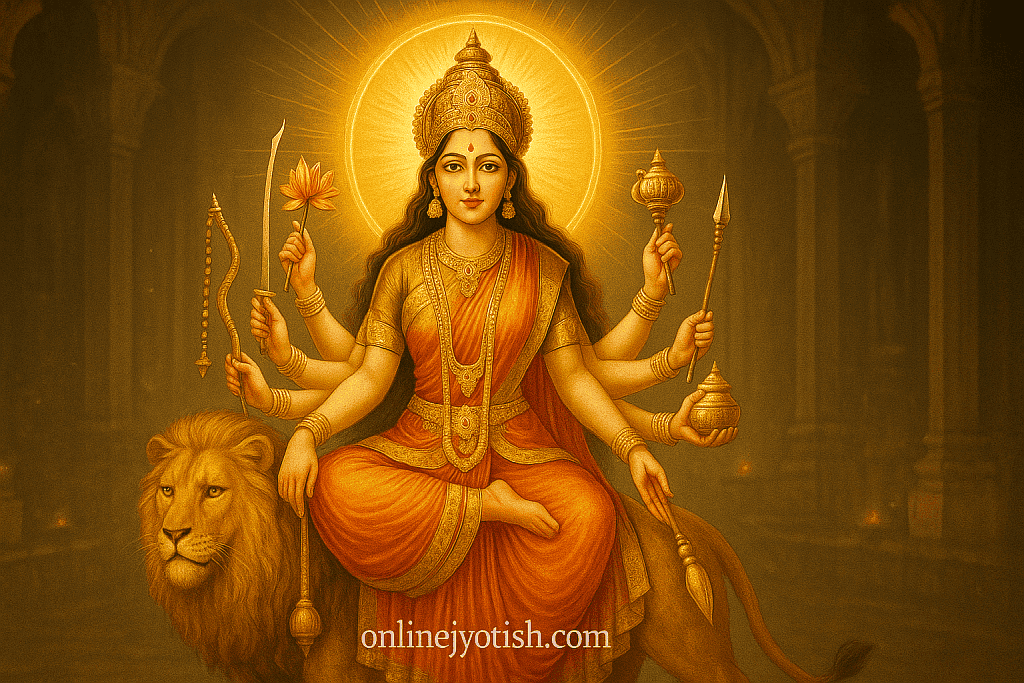
On Day 4 of Navarātri, devotees worship Maa Kuṣmāṇḍā—the radiant creatrix who illumines the cosmos. Traditional lore explains Her name as ku (a little) + uṣma (warmth/energy) + aṇḍa (cosmic egg), indicating the primal “spark” from which the universe expands. Iconographically She is Asṭabhujā (eight-armed), riding a lion/tiger, bearing a rosary, bow and arrow, lotus, discus, mace, kamandalu, and a nectar pot ( amṛta-kalaśa). She is also linked with the Sun’s brilliance—devotees meditate on Her as the source of vitality, health, and auspicious new beginnings.
Kushmanda Devi Alankāra (Temple & Home)
- Form & motifs: Eight hands displayed with śakti–weapons and boons; serene face; a softly luminous halo; vahana as lion/tiger.
- Attire & tone: Warm, sun-like accents (gold/ochre/saffron) with fresh flowers; arrange a small ghaṇṭā (bell) and the amṛta-kalaśa near the image.
- Offerings: seasonal fruits; many traditions associate the day with kuṣmāṇḍa (ash gourd) or white pumpkin preparations; North Indian guides commonly suggest malpua as bhog. Treat these as symbolic—choose a simple, sāttvika offering that suits your health and lineage.
Significance (Inner Sādhanā)
- Cosmic smile: the “first light” that dispels inner heaviness; cultivate cheerfulness as a spiritual discipline.
- Solar vitality: contemplate Her as the heart of energy—steadiness in breath/prayer, warmth in action, and clarity in intention.
- Asṭabhujā symbolism: the many hands indicate integrated effort—devotion, discipline, charity, study, service, and courageous protection of dharma.
Puja Vidhi (Simple, Authentic & Doable)
Mantra-japa: A fixed count of “ॐ देवी कूष्माण्डायै नमः — Oṃ Devī Kūṣmāṇḍāyai Namaḥ.” You may also recite the standard Navadurga stotras of your tradition.
Vidhi snapshot: Morning snāna & saṅkalpa → (Day 1 ghaṭastāpana already done) → invoke Kushmaṇḍā with āvāhana → offer gandha, akṣata, flowers, dhūpa, dīpa → mantra/stotra → naivedya (fruit/sweet such as malpua or milk preparations, or a pumpkin-based bhog) → ārati → kṣamāprārthanā. Keep items simple; attention and cleanliness matter more than number of articles.
From Day 3 to Day 4 — The Inner Bridge
Day 3’s Chandraghaṇṭā steadies courage; Day 4’s Kushmaṇḍā converts that poise into radiant enthusiasm and generative power—ideal for starting or renewing a vow of study, service, or health.
Where Navarātri is Celebrated on a Grand Scale
Navarātri is pan-Indian, but a few places are renowned for scale, heritage, or Śakti– pīṭha sanctity:
- Mysuru (Sri Chamundeshwari, Karnataka) — The state festival “Mysuru Dasara” features palace programs, Chamundi Hill rituals, exhibitions and the famed Vijayadashami Jamboo Savari.
- Shri Mata Vaishno Devi, Katra (J&K) — Sharad Navarātri draws large pilgrim footfalls with Shrine Board arrangements and daily ārati.
- Kamakhya Temple, Guwahati (Assam) — Śāradīya Durga Puja/Navarātri observed in a distinctive fortnight rhythm with Chandi recitation and Kumāri-pūjā.
- Ambaji & Pavagadh (Gujarat) — Among Gujarat’s Śakti– pīṭha circuit; massive garba traditions and fairs through Navarātri.
- Madurai Meenakshi (Tamil Nadu) — Classic Golu displays, daily alankāram, and state-listed festivities.
- Kolkata — Kalighat & Dakshineswar (West Bengal) — The heartland of Durga Puja; temple visits and cultural events surge during the season.
- Naina Devi Ji, Bilaspur (Himachal Pradesh) — A famed Śakti– pīṭha; special Navratra darshan timings and fairs.
Takeaways for Sādhana (Day 4)
- Begin something auspicious: a study plan, health routine, or charity vow—align the “creation” theme with a small, consistent start.
- Offer warmth: keep a steady lamp and a kind word—solar devotion expresses through conduct.
- Let bhog be simple: fruit, milk sweets, or a pumpkin-based dish—choose what keeps the mind light and steady.
References & Further Reading
- Navadurga overviews and iconography of Kushmanda (classical summaries and temple handbooks).
- Mysuru Dasara — official portals (festival schedules, palace/Chamundi programs).
- Shri Mata Vaishno Devi Shrine Board — Navratra arrangements & temple information.
- Kamakhya Devalaya — Śāradīya Durga Puja/Navarātri practice.
- Gujarat Tourism — Navratri, Ambaji & Pavagadh.
- Tamil Nadu Tourism — Navaratri/Golu; Meenakshi Temple page.
- West Bengal/Dakshineswar references — Durga Puja season and temple portals.
- Naina Devi Temple — official site (special Navratra timings/fairs).
About the Author

Santhosh Kumar Sharma Gollapelli is a Vedic Astrologer and the founder of OnlineJyotish.com (est. 2004). He builds multilingual Panchangam & festival calculators with Swiss-Ephemeris and classical Dharmashāstra rules, and writes practical guides connecting śāstra with daily life.
Reviewed for alignment with common temple practice and cited sources.

 Are you confused about the name of your newborn? Want to know which letters are good for the child? Here is a solution for you. Our website offers a unique free online service specifically for those who want to know about their newborn's astrological details, naming letters based on horoscope, doshas and remedies for the child. With this service, you will receive a detailed astrological report for your newborn.
This newborn Astrology service is available in
Are you confused about the name of your newborn? Want to know which letters are good for the child? Here is a solution for you. Our website offers a unique free online service specifically for those who want to know about their newborn's astrological details, naming letters based on horoscope, doshas and remedies for the child. With this service, you will receive a detailed astrological report for your newborn.
This newborn Astrology service is available in
 Want to find a good partner? Not sure who is the right match? Try Vedic Astrology! Our Star Matching service helps you find the perfect partner. You don't need your birth details, just your Rashi and Nakshatra. Try our free Star Match service before you make this big decision!
We have this service in many languages:
Want to find a good partner? Not sure who is the right match? Try Vedic Astrology! Our Star Matching service helps you find the perfect partner. You don't need your birth details, just your Rashi and Nakshatra. Try our free Star Match service before you make this big decision!
We have this service in many languages: