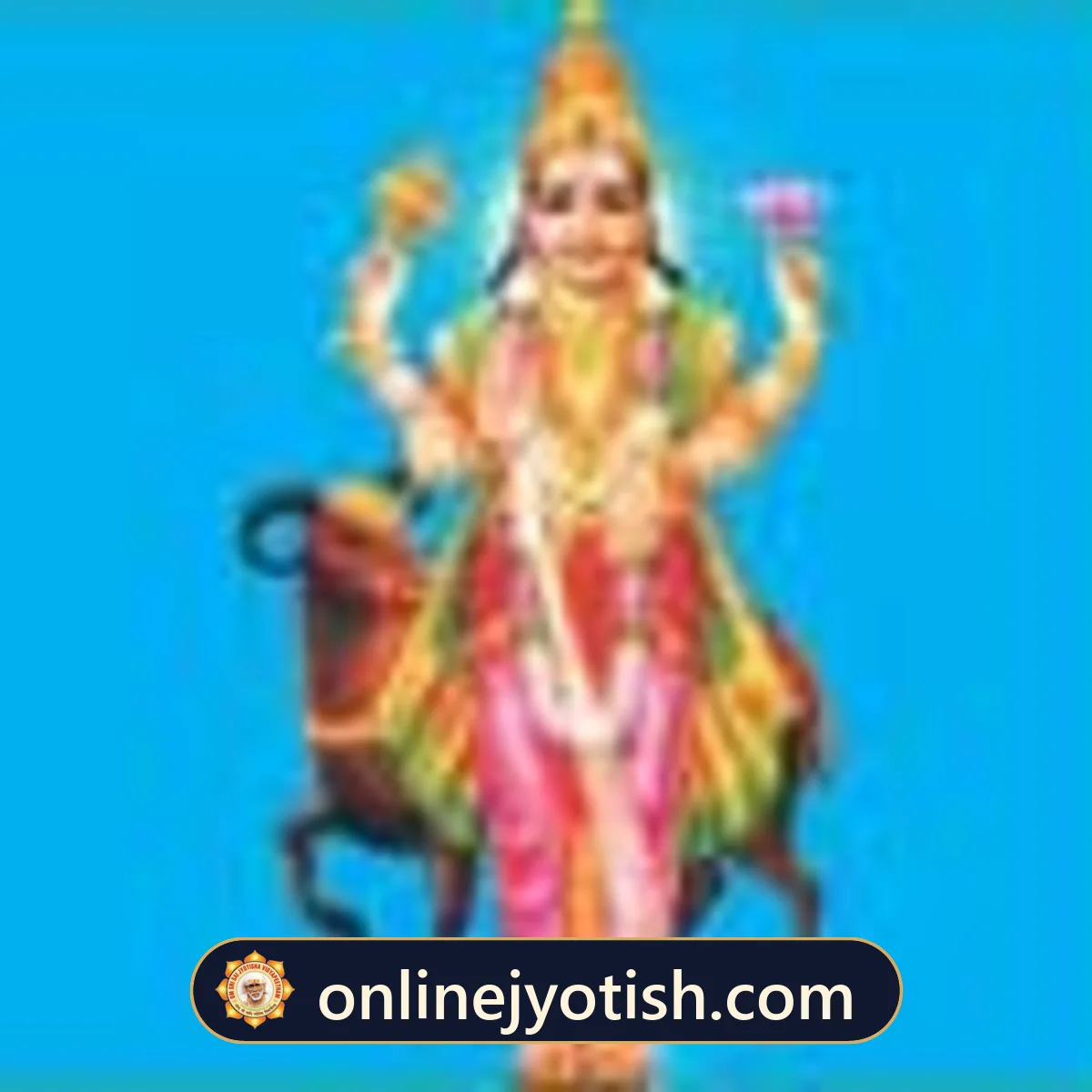
Kuja, Mangal, Bhauma and Angaraka are names used for Mars in Jyotisha. This kavacha describes the deity with red clothing and a ram as his mount, followed by prayers for protection.
The changing names in the verses refer to the same deity. Dharanisuta recalls his association with the Earth, while Shaktidhara refers to the spear he carries in this iconography. The martial imagery belongs to the prayer’s symbolism; it is not a judgement about a reader’s temperament or marriage.
Words to recognise
Bhauma: associated with Bhumi, the Earth.
Angaraka: a name evoking a glowing ember.
Shaktidhara: the bearer of a spear.
This is a summary of the prayer’s themes, rather than a word-for-word translation. Traditional blessings in a hymn express faith and hope; they do not guarantee health, wealth or protection from harm.
Reading help
Start with a few lines at a comfortable pace. A single bar (|) marks a pause and a double bar (||) marks the end of a verse. Where numbers appear, they refer to the hymn’s verses, not a required number of repetitions.
How to read the Roman letters
Long vowels ā, ī and ū are held longer than a, i and u. The letter c is like “ch” in “church”; ś and ṣ are two Sanskrit “sh” sounds. The dots in ṭ, ḍ and ṇ mark sounds made with the tongue curled back. ṛ is a vowel; ṃ marks a nasal sound and ḥ a light release of breath. A mark like ’ indicates an omitted a at a word boundary.
In simple spelling, aa, ii and uu usually stand for the long vowels, while sh stands for a “sh” sound. Written spelling is a starting point; listening to a knowledgeable reciter helps with sounds that English does not distinguish.
Do I need to perform a full ritual?
You may read the hymn and its explanation as devotional literature. This page does not prescribe fasting, costly offerings or a compulsory daily count. Formal practices, including mantra initiation and nyasa (ritual placement of mantras), vary by tradition and are best learned with a teacher.
Text reference: Kuja (Mangal) Kavacham at Sanskrit Documents. Readings and verse numbering can vary between editions. This page focuses on the hymn text; separate ritual preliminaries and closing source attributions are not reproduced.